

Attachment Across Neurotypes: Working with Neurodiverse Couples in EFT
January 29, 2027 @ 9:00 am - 12:00 pm
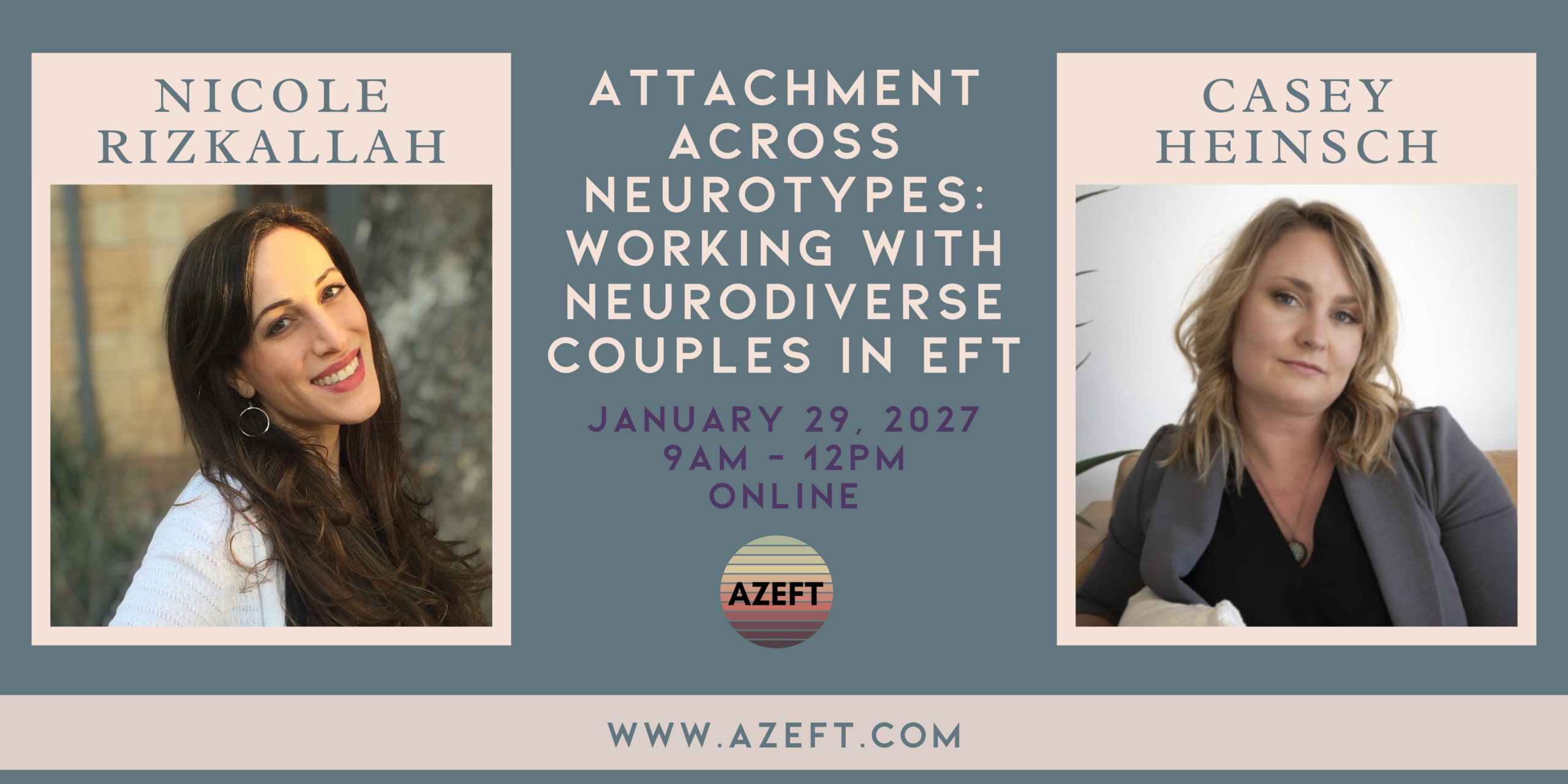
AzEFT Community Workshop
Attachment Across Neurotypes: Working with Neurodiverse Couples in EFT
Presenters: Nicole Rizkallah, LMFT & Casey Heinsch, LMFT
January 29, 2027
9am – 12pm
Online
Neurodiversity can shape how partners experience emotion, process information, communicate distress, manage overwhelm, and reach for connection. Working effectively with neurodiverse couples requires an integrated case conceptualization—one that considers attachment, neurotype, trauma, individual history, and relational and sociocultural context rather than viewing couple distress through any single lens.
This workshop explores how to integrate neurodiversity into the attachment-based framework of Emotionally Focused Couples Therapy (EFCT). Drawing on a contextual and culturally responsive stance, including principles from the CARE model, participants will consider how differences in neurotype and lived experience shape partners’ understanding of themselves, one another, and their relationship.
Participants will learn to differentiate neurodivergent processing, trauma responses, and attachment-based protective strategies while recognizing how these processes overlap and become woven into the couple’s negative cycle. We will explore how differences in processing, communication, sensory experience, and regulation can acquire attachment meaning and contribute to patterns of pursuit, withdrawal, escalation, or shutdown.
Using the EFT Tango, clinical examples, and experiential practice, participants will learn to develop a more nuanced map of the couple and adapt pacing, emotional deepening, enactments, regulation, and cycle work accordingly. Rather than creating a separate version of EFT for neurodiverse couples, this workshop aims to increase therapists’ contextual awareness, precision, and flexibility while helping partners understand difference without pathologizing it and create greater safety, responsiveness, and connection.
Learning Objectives
By the end of this workshop, participants will be able to:
- Develop an integrated EFT case conceptualization that considers neurotype, attachment, trauma, individual history, and relational and sociocultural context, informed by principles of the CARE model.
- Differentiate neurodivergent processing, trauma responses, and attachment-based protective strategies while recognizing how they may or may not overlap and interact.
- Map neurodiversity within the EFT negative cycle, including how differences in processing, communication, sensory experience, and regulation can acquire attachment meaning and shape partners’ protective responses.
- Identify common clinical misattunements and assumptions that can occur when working with neurodiverse and mixed-neurotype couples and develop more responsive ways of understanding each partner’s experience.
- Adapt the EFT Tango and experiential interventions through modifications in pacing, emotional deepening, enactments, regulation, and cycle work while maintaining the attachment-based foundations of EFT.
About the Speakers
Nicole Rizkallah, LMFT, is a Licensed Marriage and Family Therapist in Arizona and California, ICEEFT Certified Emotionally Focused Therapist, ICEEFT Certified Emotionally Focused Couples Therapist, Certified EMDR Therapist, and Clinical Supervisor. She is the founder of Orari Healing Therapy in Phoenix, where she specializes in couples therapy, trauma, and attachment injuries. Nicole provides EFT supervision and consultation and teaches and presents on EFT, trauma, and culturally-attuned clinical practice.
Casey Heinsch, LMFT, is Co-Founder and Clinical Supervisor of Family Connections & Learning Center (FCLC), a practice specializing in therapeutic and educational support for neurodivergent individuals, couples, and families. Casey specializes in neurodivergent development and the ways differences in processing, executive functioning, emotional regulation, and communication impact relationships. Her work integrates neurodiversity, attachment, and relational trauma, with a particular passion for helping clinicians move beyond labels to better understand the needs and lived experiences of neurodivergent individuals and their families.
Cancellation / Refund Policy
In the event that you have paid for an upcoming event but are not able to attend, you may request a refund up to 30 days prior to the event. Refund requests must be received in writing via email to: communityworkshops@azeft.com. Requests received at least 60 days prior to the start of the event will receive a full refund of the registration minus the Eventbrite refund fee. Requests received between 30-59 days prior to the start of the event will receive a 50% refund of the registration minute the Eventbrite refund fee. No refunds will be issued for cancellations received less than 30 days prior to the start of the event.